
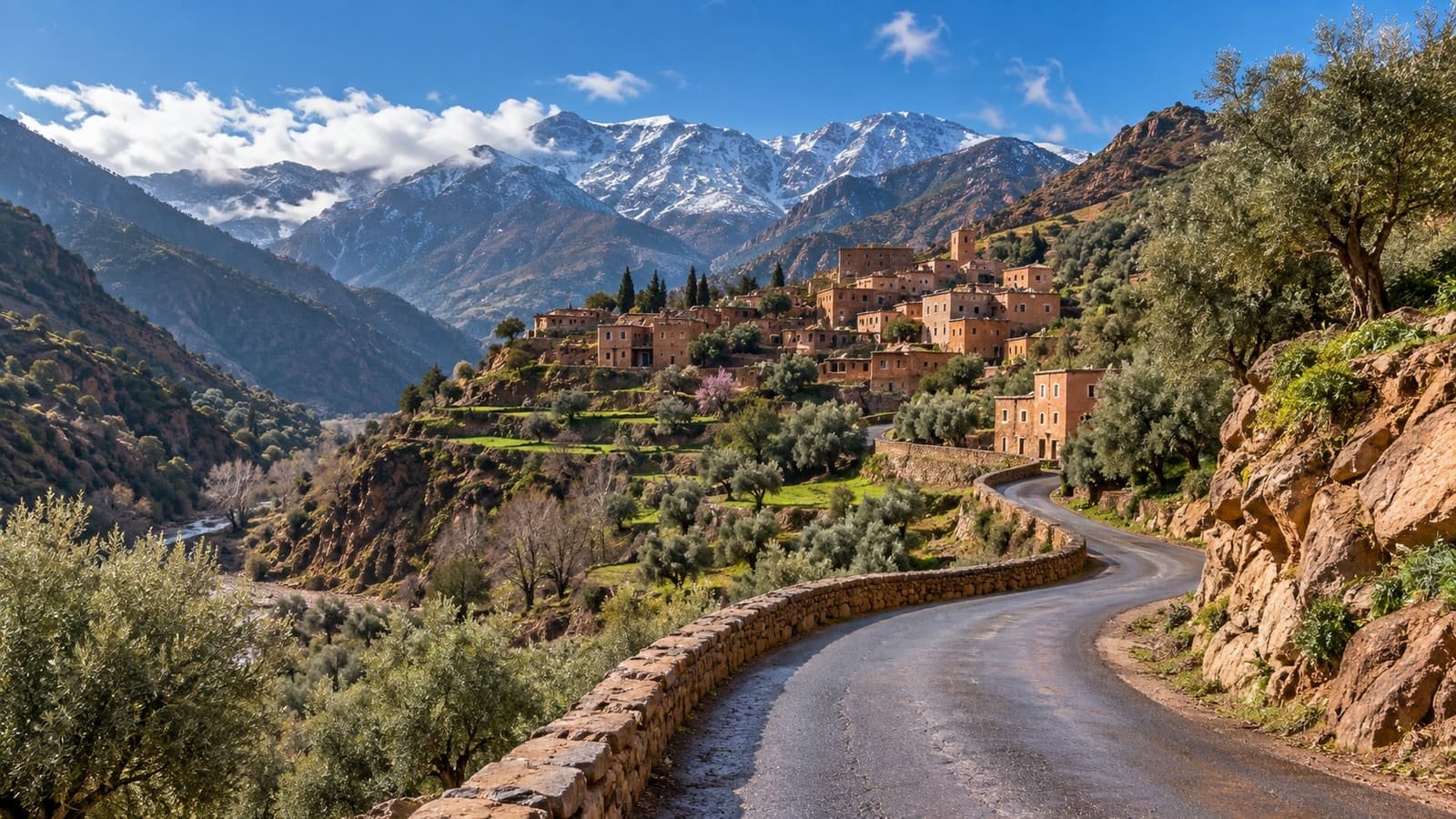
Both valleys are the gateway to the High Atlas for somebody based in Marrakech. They look similar on a map and very different once you are there.
Ourika: the valley that fills up
The Ourika begins about thirty-five kilometres south of Marrakech and runs for several dozen more. People go for the river, the Setti Fatma waterfalls, the restaurant terraces almost in the water, and the Berber villages climbing the slopes.
It is the easier outing: about an hour on the road, a short walk if you want one, lunch beside the river. It is also the busier one, especially at weekends and in the afternoon.
The Atlas and the Imlil valley: the mountain you walk
Imlil is higher and further — around sixty-four kilometres, an hour and a half by road — and it is the starting point for climbs towards Toubkal, the highest peak in North Africa at 4,167 m. You will not climb Toubkal in a day, but you will walk its lower slopes.
The day is more physical, the landscapes wider, and the sense of being in mountains much sharper. Fewer people, too.
| Ourika | Atlas / Imlil | |
|---|---|---|
| Distance | ≈ 35 km | ≈ 64 km |
| Driving time | 50 min to 1 h 15 | ≈ 1 h 30 |
| Effort | Short walk, optional | Trail walking, several hours |
| What you come for | River, waterfalls, villages | Valleys, peaks, passes |
| Crowds | Busy at weekends | Quieter |
| With young children | Better suited | Depends on age and habit |
How we help people choose
- You want out of the city without tiring yourself, and lunch by the water: Ourika.
- You will happily walk three or four hours and want real mountain scenery: the Atlas.
- You are travelling with young children, or somebody who does not walk far: Ourika.
- You have one day outside Marrakech and cannot decide: Ourika is the safe choice, the Atlas is the memorable one.
What people ask us
Can you do both?
On two separate days, yes. In one day, no: they are different valleys, and combining them means spending the day in a car.
Are the Setti Fatma waterfalls worth the climb?
The first waterfall is about thirty minutes' walk on a rocky and sometimes slippery path. The ones beyond take more effort. Without proper shoes, stop at the first — it is already a good walk.
What about winter?
Both stay accessible, with snow possible at altitude on the Imlil side. The conditions on the day are checked with the operator before you leave.